
This is Yoon, the store manager.
Thank you very much for your continued patronage of our store “Jan”.
Otsuka is a town where the JR Yamanote Line and the Toden Arakawa Line intersect, and where a nostalgic, nostalgic downtown atmosphere and the vibrancy of new shops mix comfortably. We, “Jan,” are located just a 3-minute walk from the north exit of Otsuka Station. Every day, we are surrounded by the smiling faces of local people, businessmen on their way home from work, and families and couples who travel from far away on the weekends, and are surrounded by the fragrant smell of grilling meat and a lively atmosphere.
In today’s blog, I would like to talk about Kalbi, the absolute ace of yakiniku, which is something that everyone orders at least once when they go to a yakiniku restaurant. From the perspective of a yakiniku restaurant manager, we will talk about the true meaning of kalbi, its charm, and even the most delicious way to grill it at home or at your restaurant. As for how to bake it, I’ll also share my own “secret to never burning it,” which is a little different from the popular theory, so please stick with me till the end.
[Etymology and true meaning of galbi]
Do you know the origin of the word “galbi”?
Galbi is a Korean word that originally means “rib bone.” In other words, it refers to the meat around the ribs, which is the part of Japanese meat called “belly meat.” The area around the ribs moves every time the cow breathes, and at the same time, it also plays a role in supporting the cow’s body, so the meat is characterized by its strong fibers and plenty of rich fat.
Before the name “karubi” became established in Japanese Yakiniku culture, it was simply called “belly meat.” However, this cut has a perfect balance of sweetness from its fat and delicious flavor from the lean meat, and grilling it on a grid removes excess fat and brings out its aroma, making it explosively popular as the meat most suitable for yakiniku cooking. Nowadays, when you think of yakiniku, everyone thinks of kalbi, so much so that it has become a standard dish.
[The profound appeal of short ribs that vary depending on the part]
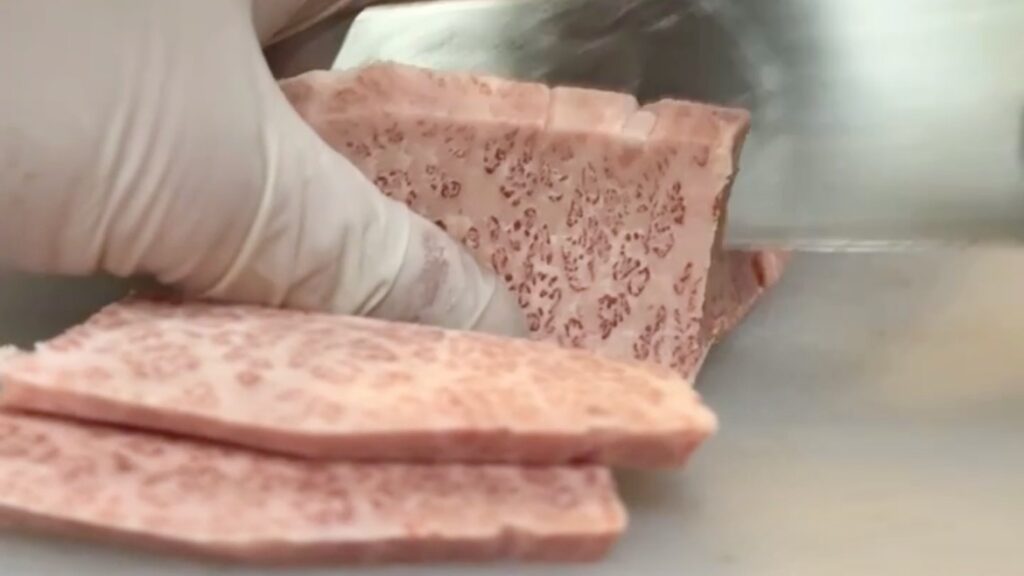
Did you know that there are actually many different types of short ribs? As the belly meat occupies a very large part of the cow’s body, the flavor and texture will vary greatly depending on where it is cut.
■Shoulder roses (triangular roses, etc.)
This is meat from the base of the cow’s front legs. The marbling (marbled) is beautiful and easy to enter, making it a cut that is often served as premium short ribs or top short ribs. As soon as you put it in your mouth, you can directly feel the melting sweetness of the fat and the rich flavor of the meat.
■Tomobara (Nakaochi Kalbi, etc.)
The meat between the ribs is called “nakaochi kalbi.” The meat around the bones has a strong flavor and is packed with flavor. It is often cut into dice, and is a very popular part for yakiniku connoisseurs, where you can fully enjoy its chewy texture and juicy meat juices.
[Jan’s passion for ribs]
At “Jan” in Otsuka, our mission is to provide everyone with the highest quality A5 rank Japanese black beef at an affordable price. Of course, the commitment to ribs is also extraordinary.
At lunchtime, the “Wagyu Kalbi Lunch” (1,100 yen), which uses various parts of Kuroge Wagyu beef, is very popular. The set includes rice, soup, and a drink, and since you can get a large serving of rice for free, it has been very popular as a source of afternoon stamina for people working around Otsuka.
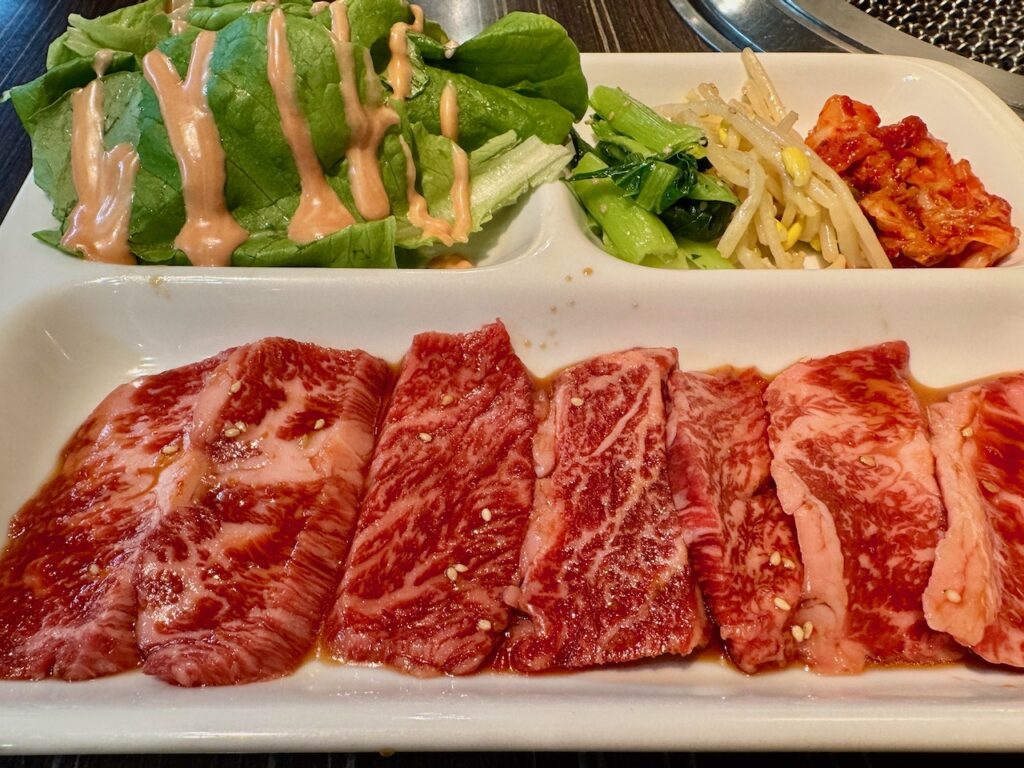
In addition, we offer lunch menus that use high-quality meat that can only be made at a Yakiniku restaurant, such as the “Wagyu Beef Kalbi Loin Lunch” (1,000 yen), where you can enjoy both Wagyu Beef Kalbi and Loin, and the luxurious “Top Rib Cut Off Lunch”, which is available in limited quantities. The “Jan’s Stewed Beef Bowl (900 yen)” and the “Awase Mori” (1,000 yen), a combination of beef bowl and spicy curry, served at lunchtime also use plenty of our delicious cuts of meat.
In the evening, during dinner time, we offer an even higher quality experience. In the Wagyu Beef Enjoyment Course (6,600 yen, tax included), which has the highest repeat rate at our restaurant, you can enjoy carefully selected premium short ribs, along with the famous “Wrapped Green Onion Top Tongue”, which is our number one best seller, and the photogenic “Large Wagyu Beef Sirloin”. For those who want to enjoy meat more casually, we also recommend Jan’s Introductory Course (4,400 yen, tax included), which has 13 dishes. The sweetness of the fat from A5 rank Wagyu beef is not greasy and gives you an elegant taste that melts in your mouth. If you enjoy it with our special sauce, it will definitely put a smile on your face.
[Manager Yoon’s direct report! The secret to deliciously grilling short ribs]
The taste of delicious short ribs can change dramatically depending on the way you grill them. Here, I, Yun, will introduce the method of grilling that brings out the maximum flavor of short ribs.
■1. Warm up the net thoroughly.
Always make sure the grate is hot enough before placing the meat on it. If you place meat on a cold grill, the juices that give the meat its flavor will slowly escape. The first rule is to start grilling when the grill is hot enough to produce a little smoke.
■2. When preparing meat, be sure to cook it over a high flame.
Kalbi is a fatty part, so it tends to get hotter. The trick is to quickly bake the surface in the center of the grill where the heat is strong and lock in the flavor, then move it to the edge of the grill where the heat is slightly weaker so that the heat penetrates to the inside.
■3. Turn over frequently to find the best doneness!
A common Yakiniku theory is that “it’s best to turn the meat only once.” However, I, Yoon, strongly recommend that you “turn it over frequently!”
This is because the most important thing to avoid when grilling is “burning the delicious meat black.” Cuts like short ribs that have a lot of fat on them often catch fire when the fat falls on the grill, causing a sudden flame to rise. If you leave the meat unattended due to the rule that you can only return it once, it will quickly burn and the original sweetness and flavor of the meat will turn bitter.
Therefore, always keep an eye on the grill, turn the meat over from time to time, and judge the doneness with your own eyes. By moving the food frequently, you can evenly cook the food, completely preventing the risk of it burning, and still get the best flavor with a fragrant outside and juicy inside. Try searching for the best timing, as if you were constantly having a conversation with the meat on the net.
■4. The strongest marriage of sauce and rice
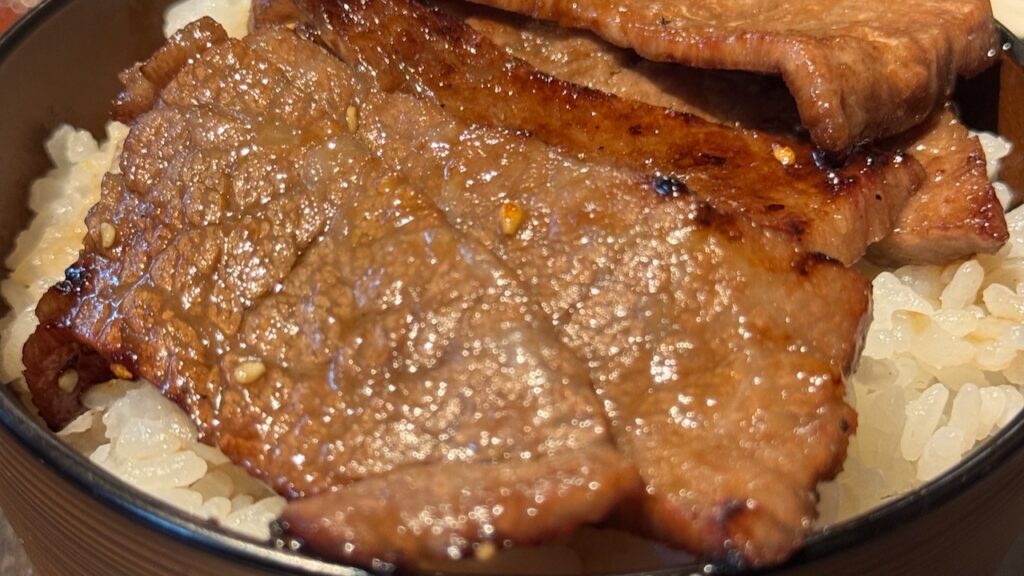
Once the ribs are cooked, dip them in our special sauce while still hot. And while you can eat it as is, my best recommendation is to “bounce” it on top of freshly cooked white rice. The rice soaked in the sauce and the juices from the short ribs becomes a great feast on its own.
[The best Yakiniku experience in Otsuka]
What did you think? From the origin of the word kalbi to the secret to grilling it deliciously without burning it, the more you know, the more you’ll enjoy yakiniku and the more delicious it will become. The next time you eat yakiniku, be sure to check the condition of the meat frequently to make sure it doesn’t burn and try to get the best doneness.
We at “Jan”, in the warm city of Otsuka, hope to bring you “moments where you can feel energized with delicious meat” in your daily life. The chic and calm interior offers everything from semi-private table seats perfect for dates or small groups to spacious tatami mat seats with sunken kotatsu tables where you can stretch your legs and relax. It can be used for a variety of occasions, including family get-togethers, drinking parties with friends, welcome and farewell parties, and other parties (we can also rent it out for up to 30 people depending on your budget).
If you want to eat really delicious meat in the best condition without burning it, and at a reasonable price, please come to “Jan” in Otsuka. All of our staff members look forward to your visit with our warm hospitality. Please spend a blissful time at Yakiniku Stadium tonight!
■Store information/reservations■
・Japanese black beef specialty Yakiniku Stadium Jan Otsuka main store
・Address: 1F SK Building, 2-11-1 Kita-Otsuka, Toshima-ku, Tokyo
・Telephone number: 03-3910-9065
・Click here to make a reservation:https://tabelog.com/tokyo/A1323/A132302/13168261/
Comment